
My Facebook Interviews
The Message
A Facebook Recruiter messaged me on LinkedIn and said she would like to see my resume and portfolio for a content strategist job.
“Are you sure?” I wrote back. Seriously.
It’s not that I have low self-esteem. Maybe about my body, but not about my work. In fact, my work is the one aspect in my life that I’m absolutely sure about. I am constantly testing my skills (part of the job), reading every new book in the industry, and if I don’t know something, I’ll learn as much as I can until I get it right.
So when I asked, “Are you sure?” it was more about the job itself.
When she sent me the job description and I was like, “While I’m honored to be considered by Facebook, I’m not sure I’m the right fit. I haven’t been a writer for awhile; I’ve been doing mostly information architecture and interaction design for the last few years.”
She said that she’d like me to send my stuff over anyways.
.
The Content Strategist Job
For those who are not in the industry, content strategist does a multiple of things. Generally, it’s “the planning, development, and management of content—written or in other media.“
Any kind of information you digest is considered content:
- Copy
- Images
- Infographics
- Video
Unfortunately, some companies think they want a content strategist when they really want is UX writer or editor. UX writers are incredibly good at creating and labelling content, but their focus is mostly words – telling stories and instructing users.
Content strategy is not. just. writing.
What a Content Strategist actually does:
- Analyze content (finding out what content users are interacting with)
- Organize content (what type of content goes where)
- Manage content (how it’s updated and who does it)
- Govern content (ensuring it stays within company’s brand)
- Market content (assists with types of content used and editorial calendar)
There’s more, but these are the top five elements.
Now Facebook’s description was very vague. The description also seemed to emphasize content, not strategy. Especially concerning the types of samples they requested- more copy-centric then how/why we made decisions.
The Interviews
Phone Interview
Pretty standard. The woman asked me questions about my background and my skillset. She mentioned that there were many “villages” at Facebook – meaning it wasn’t a big corporate structure. Each team worked on specific parts of Facebook.
I asked for a more detailed description, and she said they were vague on purpose because they were potentially filling up to 50 roles.
50?!? Yea, knowing the number does make one feel slightly worse about not getting the job.
But why so many? I have worked on some big websites, and I’ve never had more than one content strategist. Maybe two or three, and I often do some of the work as an Information Architect as well, but that seems like overkill.
Strategy is about the big picture, overall direction to goal, and steps to get there. If there’s 50 different villages that are getting their own strategist, who is in charge of organizing the strategists’ strategies?
Video Interview
Since I’m pleasant enough on the phone, I was then scheduled a video interview. The interviewer was a super nice guy who worked at instagram. We talked and joked about how no one really understands what we do.
I had sent in samples that were mostly strategy related; personas, flows, digital campaign numbers. The one he wants to talk about? The user interface copy that was highly regulated by legal.
I, again, asked about the role, and he talked about how the different groups are like their own separate villages. I’m beginning to see a pattern here.
Didn’t have to wait long, as I got a call that night to talk about the next step.
The Design Challenge
Seriously, a design challenge is a way for a company to see what your skills/thinking/process are before hiring you (much like a portfolio). They’ll ask you to complete a task or two (without data or research) and you come up with a solution in the vacuum (thus not really understanding your thinking because you have no data to analyze).
Facebook gives you two days to do three tasks. Two of these tasks are issues you decide you want to fix (one desktop, one mobile) and then one task they give you.
The Problem
Problem: Not All Users are the Same
I really, really hate it when I (accidently) end up in a facebook argument, or some other heavily commented section, and I lose other notifications in the craziness. Not only that, I have previously been a mod in a group, and it would be notifications ALL THE TIME. Anything else would get lost in the mess.
The worst of it: I am both a personal user and a business page user. My biggest pet peeve is that whenever I get a BUSINESS notification it’s mixed in with all those event posts notifications, so even if I didn’t want to care about it at that moment, I am now back in business mode.
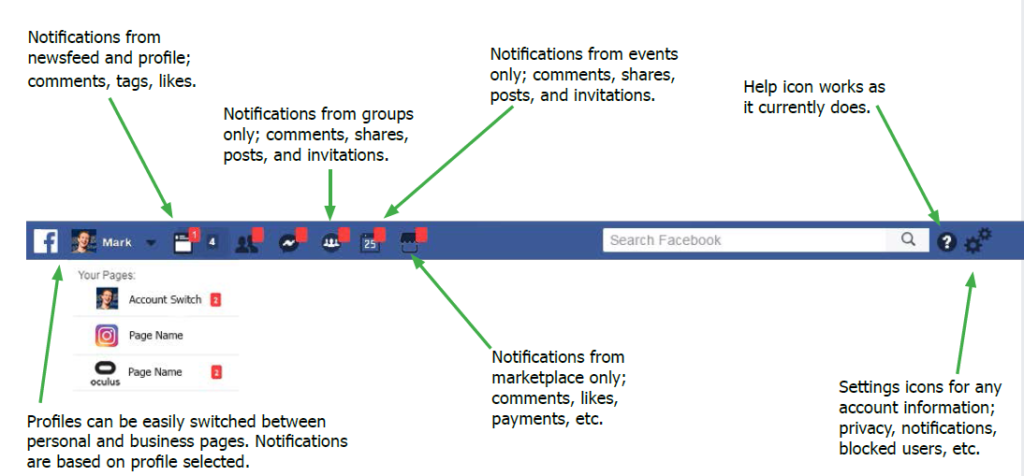
Solution: Differentiated Profiles and Notifications
Restructuring information on the home page, specifically the so that different users (i.e. traditional user and business user) can quickly access the information/task they want.
Simplified: I want a separate experience for my business page vs. my personal page vs moderated page.
The Solution
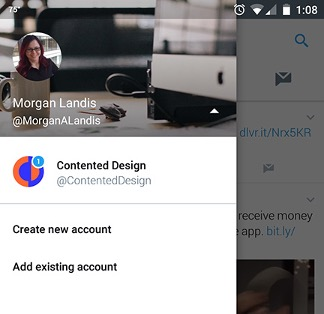
First, you’d have different profiles that you could switch between with a tally of their notifications. Much like how twitter did it back in the day.
Second, it would be separated by the type of notification; newsfeed (conversations/posts), friend requests, messenger, groups, events, and marketplace.
The notification strategy is also translated for business pages (this is the mobile version of it).
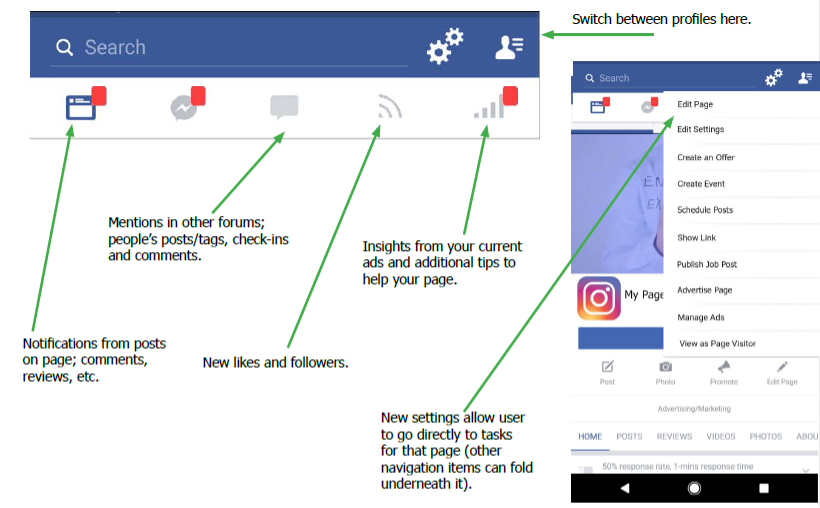
Again, I must mention, this is without any analytics, research, technical constraints, etc., so I don’t know if any of this is wanted or feasible. My driving force was empathy and instinct that business users and personal users are coming to Facebook for two different goals and tasks, and thus should be treated differently.
I Will Not Be Working at Facebook
Interviewing at Facebook was definitely an unique experience. I was giddy with excitement, wracked with nerves, cried from disappointment (not really). Why didn’t they choose me? I’m not sure. Maybe because I’m more than a content strategist. Maybe they could tell I wasn’t in love with Facebook. Maybe they saw my tweet from 2015 that talked sh*t about their UX.
Overall, it made me realize I do want to do more. To work on bigger projects. To continue on the strategy path of creating and implementing new ideas and solutions.
And hey… if Google wants to interview I won’t say no. I have some great ideas about education and Virtual Reality.
P.S. No seriously, can I put this on my resume?
Similar Posts
No Results Found
The page you requested could not be found. Try refining your search, or use the navigation above to locate the post.